
Stephen F. Austin University Press
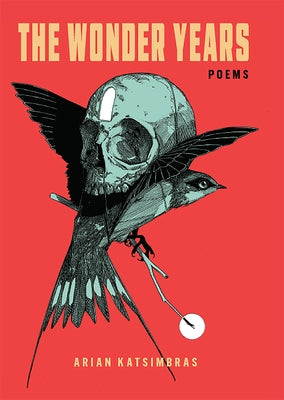
The Wonder Years
The Wonder Years
Couldn't load pickup availability
Summary:
The West of The Wonder Years is made of a series of smaller and smaller rooms. A mobile home swelling to split in late-August heat. Where storms stop short and abstain for generations. A field still burning at the edge of childhood. With materials unceasingly sharp and surprising, Arian Katsimbras creates a language of "clean brutality." In these pages, the drought-wracked West decays into a coyote's rib bones, into an animal split into ribbons, into the long nightfall. Families are torn, a marriage cracks, relationships fail, but " between "the names for empty that will never fill," the magic here is the feat of existence amid so many disappearing acts. Though unflinching in their examination of grief, the poems in The Wonder Years brim fiercely with unsentimental love. The relationship between a father and son becomes a riot against history--a promise to sever a cycle of paternal harm, to be a true light, even if just a single bare bulb, shining against the coming dark. The Wonder Years is a closed loop of an interior American West that is unconcerned with escape, whether sanctioned or obsessively mapped, mythological or otherwise. It is a book about damage, sure, but more than that, it is about attention. About staying with the living.
"The Wonder Years" is a brilliant collection; a meditation on fatherhood, loss, and survival. These poems are dipped in Nevada's cities and
landscapes, but it's Katsimbras' ability with language that elevates it: raw, ethereal, intimate, and ornate. What a find."
- WILLY VLAUTIN, author of The Left and the Lucky and The Horse
"Hollyhocks, mobile homes, magpies and skies of brushfire smoke--Arian Katsimbras' The Wonder Years burns and hurtles
down the pocked streets and desert highways of the American West. 'Listen, ' the poet insists, 'we poor had something to say.' Indeed, you
ought to listen up. This is a book to read out loud, a book on fire--a book of grief and howling mouths and, too, of reckoning, of hard-
earned hope and long-sought tenderness."
- JOE WILKINS, author of The Entire Sky and Pastoral, 1994
"In Arian Katsimbras' The Wonder Years, scars are touched, their heat felt, their pain gifted. They are sites of wounding and of reverence.
There is in these poems a wonder at the depths of pain--the brutality and abandonment suffered in the poet's youth--but also a wonder
at the deep care Katsimbras bestows upon his son. We get the sense that as a father, the poet is learning to love twice--his own son and
himself. Equal parts visceral and tender, this collection excavates 'that familiar sound of grief 's keep, its needed maintenance, singing
along to its own tradition, ' and then breaks with it."
- CAMERON MCGILL, author of In the Night Field
the high desert night and bleached bone, a world fashioned out of flash and recoil, and the violence of our fathers, and yet even as they
glisten with our failures, they move toward redemption and a delicate mending--especially the poignant poems addressed to his son.
Katsimbras knows something about the consummation of thievery and faith, and how if we gaze out into the broken fragments of the
world and pray hard enough, we can dust ourselves off, kiss our sons, and walk the long path we must travel to forgive ourselves."
- LINDSAY WILSON, author of No Elegies and The Day Gives Us So Many Ways to Eat
"The sweep of The Wonder Years is immense, from the spiritual
endlessness of the desert to the hidden terrors of daily American
life. The power, here, is that emotional tidiness and moral curation
are exiled from these poems, that language is made to hold all things
all at once. An arresting book of unruly contradictions and earned
truths that are ultimately tempered by tenderness and love."
- MICHAEL MCGRIFF, author of Inquest and Angel Sharpening its Beak
"In these poems, shifting intimacies are tangible, deeply felt. Familial violence. Betrayal of self, others. The curative curiosity of a child.
And fatherhood which magnifies love, which allows the speaker to reckon with the past, to live in the present. Arian Katsimbras is a
tremendously gifted poet who has written a remarkable and moving book.
- EDUARDO CORRAL, author of Slow Lightning and Guillotine
Author: Arian Katsimbras
Binding Type: Hardcover
Publisher: Stephen F. Austin University Press
Published: 10/06/2025
Pages: 92
Weight: 0.62lbs
Size: 9.00h x 6.00w x 0.38d
ISBN: 9781622882502