
Diwan Press
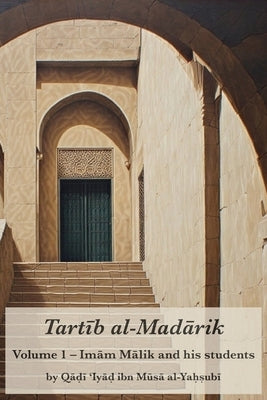
Tartib al-Madarik: Volume 1 - Imām Mālik and his students
Tartib al-Madarik: Volume 1 - Imām Mālik and his students
Couldn't load pickup availability
The Tartīb al-Madārik (Organising the means and revealing the methods for discovering the eminent scholars of the School of Mālik) by Qāḍī 'Iyād al-Yaḥṣubī is a seminal biographical compendium of the scholars of the Mālikī school. It begins with an extensive biography dealing with Imām Mālik and records the chains of scholars from him, divided by region, listing over 1300 scholars in nine generations in eight volumes. through nine generations to the time of the author.
Shaykh Abdalqadir as-Sufi regarded the Tartīb al-Madārik as the essential record of the intellectual lineage of the scholars who transmitted the school of Madina, and it is the foundational reference in his seminal work, Root Islamic Education because of how it highlights the knowledge and behaviour exemplified in the lives of the early scholars. He says:
'We can show you a line that goes from Madinah al-Munawwara at the time of the Messenger of Allah, may Allah bless him and give him peace, through to Imam Malik, and from Imam Malik continues for five hundred years-in the Middle East, to the gates of India and to the gates of Russia, right across North Africa, right into Europe. For five hundred years, you find that the leadership was in the hands of slaves who were fuqahā' and before whom amirs bowed their heads. And I say that is Islamic history, and not this other thing that has been invented by the orientalists which we have fallen for - of dynasties and epochs marked by changes in the style of jugs and arches.' (p.16)You could say that the Tartīb al-Madārik provides the foundation and blueprint for the understanding conveyed by Root Islamic Education. The work provides biographies of the scholars and their historical positions and how they dealt with the problems that arose in times of conflict because we see the interaction of scholars with the Abbasids, Aghlabids, Fatimids, Andalusian Umayyads, Murābitūn, and others. We see how they interacted with power, and the role and proper behaviour of the qāḍī. It also fleshes out the implementation of the dīn, providing a practical guide to education and action. It shows Islam embodied in real people and the action which that produces in society. It is a corrective to an abstract or idealised approach to Islam. It also provides us with a rich tapestry of the history in which the scholars lived, particularly North Africa and Andalusia, and a sort of historical map of Maliki scholars. It is, as Shaykh Abdalqadir says in Root Islamic Education:
'We would take the Tartīb al-Madārik of Qadi Iyad because it gives this record and will let them see an example on which they must be based, and on which they have no choice but to be based. The Tartīb al-Madārik is a record of human achievement, Islamically, that, I tell you, when you study it, you will say, "I did not know such men existed on the face of the earth!" And the Tartīb al-Madārik is more electrifying than any of the books of the Tadhkirat al-Awliya' and so on-much more electrifying as a phenomenon of the human splendour of the people that this Islamic deen has produced. It is magnificent, in its raising up of the human being.' (p. 21)Author: QāL Al-Yaḥṣubī
Binding Type: Paperback
Publisher: Diwan Press
Published: 06/15/2026
Pages: 686
Weight: 2.08lbs
Size: 9.21h x 6.14w x 1.51d
ISBN: 9781914397509